Guyana: rainforest, savannah and Kaieteur Falls
Not the former Mot Mot Travel tour company - we don't sell holidays.
Quick answer: Guyana lies on the Atlantic coast of South America, between Venezuela, Brazil and Suriname. BirdLife International lists 794 bird species for the country, from the harpy eagle to the hoatzin, Guyana's national bird. For nature, start with the big three: Kaieteur Falls, the Iwokrama Forest and the Rupununi savannahs.
Kaieteur Falls
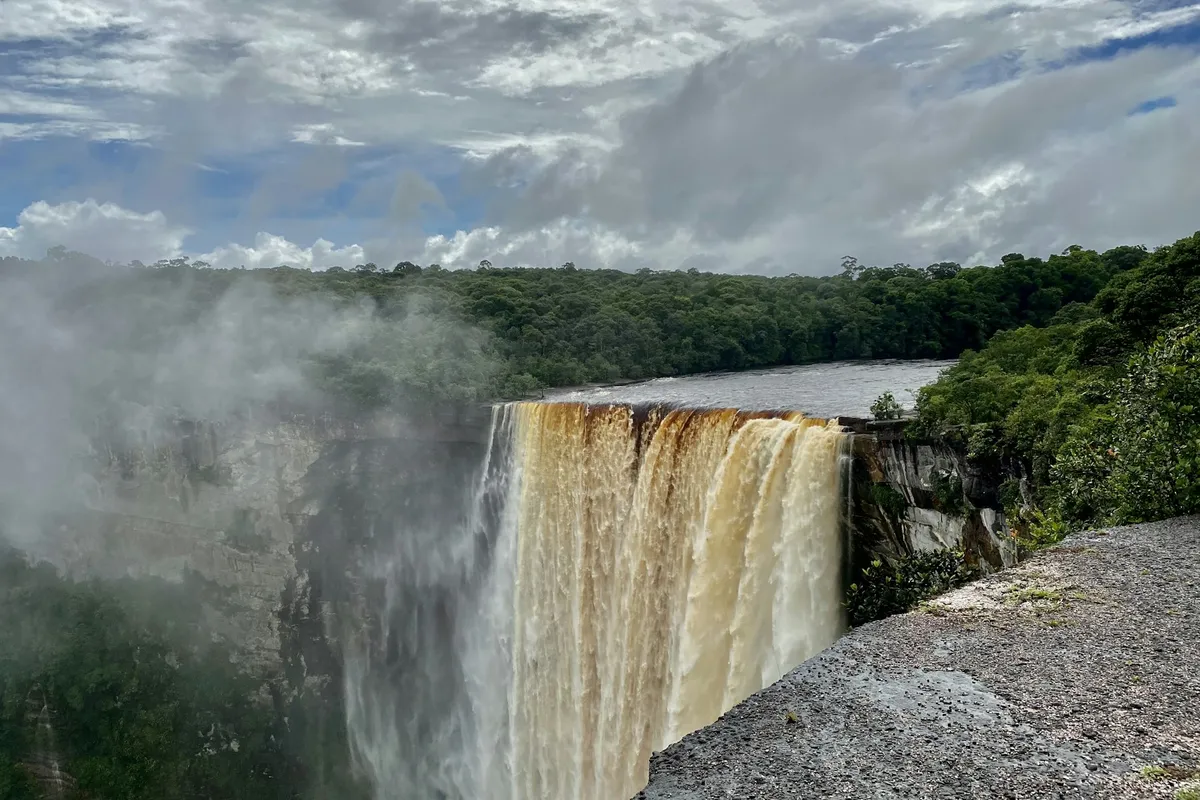
Kaieteur Falls drops 226 metres (741 feet) in a single plunge on the Potaro River, a tributary of the Essequibo. The Protected Areas Commission says this mix of height and volume is unusual for a single-drop waterfall.
Kaieteur National Park dates from 1929, and the commission calls it the oldest protected area in the Amazon region. Its wildlife list includes the harpy eagle, giant river otter, giant anteater and the tiny golden rocket frog, which it describes as endemic.
The tourism authority suggests looking for the bright orange Guianan cock-of-the-rock and for swifts that nest behind the falling water. Guided walks visit three viewpoints, each closer than the last. Regular flights from Ogle Airport in Georgetown take about an hour.
Iwokrama Forest and the canopy walkway
Iwokrama covers 371,000 hectares of tropical rainforest in the heart of Guyana. The Government of Guyana and the Commonwealth Secretariat set up the Iwokrama International Centre in 1996 to research sustainable forest management and protect biodiversity. The centre works with Makushi communities of the North Rupununi.
It installed a canopy walkway in 2002, and the National Trust of Guyana says it stands 33 metres (108 feet) above the ground. The tourism authority calls Iwokrama ideal for birding, with hundreds of species in the canopy of greenheart, crabwood, mora and purpleheart trees. The forest also gives you a chance of caimans, harpy eagles and, with luck, a jaguar.
The Rupununi savannah
In south-western Guyana, the forest gives way to the open grasslands of the Rupununi. The tourism authority describes dry grassland for part of the year and marshy wetland after the rains. It lists giant anteaters, capybaras, caimans, tapirs and anacondas, plus hundreds of bird species.
The Rupununi is the place for the rare red siskin. BirdLife lists it as Endangered and reports that a population of low hundreds to low thousands was found in south-western Guyana in 2000.
The sun parakeet, also Endangered, breeds around Karasabai on the Ireng River, according to BirdLife. The tourism authority also names the Kanuku Mountains as harpy eagle country.
Birds of Guyana: what to look for
The tourism authority says Guyana has sought-after birds that are not overly difficult to see. It names the harpy and crested eagles, the Guianan cock-of-the-rock, the sun parakeet and the hoatzin. BirdLife lists the harpy eagle as Vulnerable.
The hoatzin, known locally as the Canje pheasant, is Guyana's national bird. The tourism authority names the Mahaica River as the key place to find it.
You can start in the capital: the tourism authority says birders regularly see more than 200 species in Georgetown, including in the Botanical Gardens.
BirdLife's Guyana East Coast Important Bird Area runs from just east of Georgetown to the Corentyne River, near Suriname. It is particularly important for migrating and wintering shorebirds, with at least 90,000 semipalmated sandpipers in winter (2022-23 estimate).
New to tropical birding? Our Caribbean birdwatching guide covers kit, apps and field etiquette.
Giant otters, anteaters and other wildlife
The tourism authority says Guyana's giant river otters are the largest otters in the world, and a stable population lives in the North Rupununi. If you see them, keep well back and let the animals decide how close they come.
Black caiman, which the tourism authority calls the largest member of the alligator family, is common in the Rewa and Rupununi rivers. Giant anteaters roam the savannahs.
For jaguars, the tourism authority says your best chance is in protected areas and along remote rivers, early in the morning or late in the afternoon. For whales, turtles and more across the region, see our wildlife watching guide.
Best time to visit Guyana
The tourism authority says Guyana has two seasons, dry and green (wet). In the interior, the dry season runs from January to early May and from September to December, and the green season from mid-May to August. On the coast, the green seasons run from May to mid-July and from mid-November to mid-January.
For birding, the authority recommends the weeks just after the green seasons: September to early December and January to late April. It says Kaieteur looks its best after the rains, from September to November.
For UK travellers, the interior's dry months take in February half-term, Easter and October half-term. The school summer holidays fall in its green season.
Getting there from the UK
The tourism authority lists a route from the UK via Saint Lucia. It says most connections from Europe go through Barbados, Miami, New York, Saint Lucia or Suriname. Check current schedules before you plan.
International flights land at Cheddi Jagan International Airport at Timehri or at Eugene F. Correia International Airport, near Georgetown. Guyana is four hours behind GMT, so it is four hours behind the UK in winter and five during British Summer Time. Read the FCDO travel advice before you go.
Good bases, by area:
- Georgetown and the coast for city birding, hoatzins on the Mahaica River and flights to Kaieteur.
- The Iwokrama Forest for rainforest birds and the canopy walkway.
- The North Rupununi and the savannahs for giant otters, anteaters and grassland birds.
Adding an island? Our Trinidad and Tobago guide covers scarlet ibis, oilbirds and turtle beaches.
Watch wildlife responsibly
- Keep your distance from otters, caimans, nests and roosting birds.
- Stay on marked trails and walkways; at Kaieteur there are no rails at the cliff edges.
- Never feed wildlife, and limit recorded bird calls.
- Follow the Protected Areas Commission's request to use Kaieteur "in a respectful and responsible manner".
Sources
All pages opened on 20 October 2026.
- Guyana Tourism Authority: Birding; Nature and wildlife; Kaieteur Falls; Travel tips (seasons); How to get here; About Guyana
- Protected Areas Commission: Kaieteur National Park
- Iwokrama International Centre: Home; About
- National Trust of Guyana: Iwokrama Rainforest
- BirdLife International DataZone: Guyana country profile; Important Bird Area Guyana East Coast; species Harpy eagle, Sun parakeet and Red siskin (factsheet data read through the DataZone API)
- High Commission of India, Georgetown: About Guyana (time zone)
- GOV.UK: Guyana travel advice; When do the clocks change?
Frequently asked questions
How do you get to Kaieteur Falls?
Most visitors fly. The tourism authority says regular flights from Ogle Airport in Georgetown take about an hour. Several local airlines fly there and back in a day, usually with a guided walk in the national park.
What is the national bird of Guyana?
The hoatzin, known locally as the Canje pheasant. The tourism authority names the Mahaica River as the key place to see it.
Do UK citizens need a visa for Guyana?
We don't state entry rules ourselves, because they can change. Check the GOV.UK FCDO entry requirements page for Guyana before you book; the same advice covers safety and security.
When is the best time to visit Guyana?
It depends on where you go. In the interior, the tourism authority gives January to early May and September to December as the dry season, which covers February half-term, Easter and October half-term. Kaieteur is at its best from September to November.
What is the time difference between the UK and Guyana?
Four hours in the UK winter and five hours during British Summer Time. Guyana is four hours behind GMT.